Clovis
The Reincarnationist PapersClovis is the oldest member of the Cognomina, a senior figure whose authority is visible both in the group’s deliberations and in its rituals of welcome. He helps judge Evan Michaels’s Ascension, then receives Evan as a brother; later, he offers him a place to stay and tells the story of the tower he built as penance. His account connects the Cognomina’s present-day responsibilities to an earlier life in Mocha, where military defeat and the choice not to seek revenge shaped the work that would define his home.
Identity and Place in the Cognomina
During Evan’s Ascension hearing, Clovis sits at the center of the panel. When he leans forward, the other members defer their attention to him. At the end of one session, he calls a halt and schedules the next hearing for the night after the following one, explaining that the interval will allow the panel to verify Evan’s statements. The pause presents the hearing not as a quick act of recognition but as a judgment subject to scrutiny.
Clovis also has a consequential history within the organization. He tells Evan about Brevicepts, whose belief that reincarnates had a divine right to rule humanity led her to threaten renewed attacks against villages that had turned against the group. According to Clovis, the Cognomina had already lost everything because of her conduct. Its other members urged her to live quietly, but her desire to dominate returned when her memories did. The members concluded that expelling her was their only option, and the decision had to be unanimous. Clovis identifies the old man at the center of Evan’s panel as the member who had to cast the final vote in favor. His seniority therefore carries the burden of a past judgment as well as authority in the present hearing.
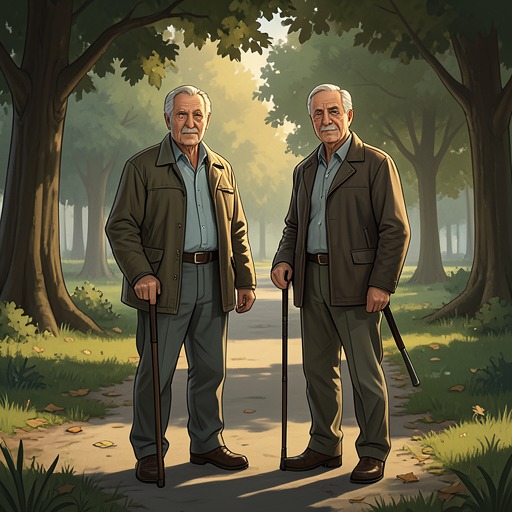
Clovis confirms to Evan that he is the oldest member. That distinction is not merely an honorific: it places him at the intersection of the group’s accumulated history, its rules for membership, and the uncertain work of recognizing a new reincarnate. His role is both institutional and personal. He participates in the scrutiny that precedes acceptance, then helps turn acceptance into a sense of belonging.
Evan’s Ascension and Welcome
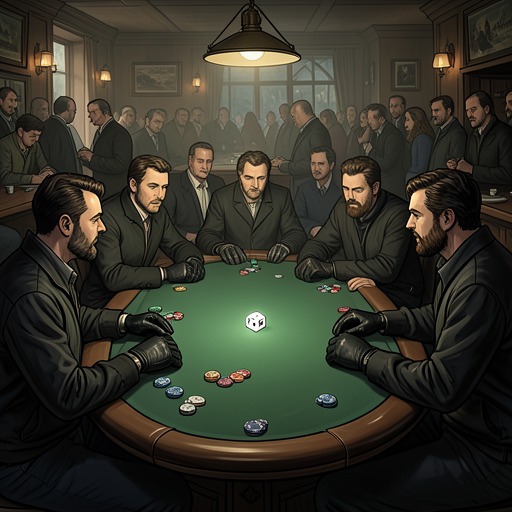
At the conclusion of the hearing, Clovis announces that the panel has voted four to one that Evan is what he claims to be and that the Cognomina will welcome him as a brother. The decision brings Evan visible relief. Samas embraces him, and the gallery responds with a mixture of cheers and groans as members settle their wagers. Mr. Diltz approaches to congratulate him. Clovis’s pronouncement thus closes the formal question of Evan’s identity while opening the social one: what it means for him to enter a community whose members share the experience he has struggled to understand.
The welcome is marked by a succession of names, faces, handshakes, and embraces. Evan feels that the members’ empathy reaches him in a way that the world outside has not, and that their attention begins to quiet the fierce individualism he had adopted since discovering he was different. Clovis appears behind the crowd and introduces himself. Evan thanks him and addresses the gathering, recognizing that its members already understand what he cannot adequately express. He calls the moment precious and says that he is home. The scene makes Clovis’s position legible through contrast: he is among the figures who have examined Evan, but he also stands within the circle that receives him.
Clovis contributes a personal object to the occasion as well. When Poppy turns to him, he presents a jambiya dagger he has brought from his homeland. It has a bejeweled silver sheath and a rhinoceros-horn handle; he cautions Evan that its Damascus blade is sharp. Evan finds that the handle fits his hand and studies the blade in the torchlight. The gift is a concrete act of welcome, and it links Clovis’s place among the members to a history and homeland he carries with him.
Mentor and Host
After the gathering, Evan wakes to find the celebrants asleep and the torches burning low. He is moving painfully and cannot find his cane when he makes his way toward the pool. There he encounters Clovis climbing out of the water. Clovis smiles and welcomes him back. The exchange is brief, but its timing matters: the formal rite has passed, and Clovis is present in the quieter aftermath, when Evan is recovering and trying to orient himself.
Clovis later offers Evan a place in his home while Evan considers a dilemma. He describes the proposed stay as an opportunity for Evan to reflect with unbiased consideration and says that having a visitor would be a rare pleasure. The offer gives Evan room to think without dictating what conclusion he should reach. Clovis’s guidance is therefore not limited to his authority on the panel; it also takes the form of hospitality and conversation. His promise of an impartial setting contrasts with the certainty required by the hearing’s vote.
Mocha and the Tower of Penance
Clovis explains that he built his tower as a penance. In an earlier life, he served as Sherif of Mocha, appointed by Ali Abdul Pasha to protect the port and its surroundings. Ali Abdul Pasha had hired him out of Damascus while seeking to consolidate his late father’s territorial gains against the Ottomans. Clovis says he had been content with his responsibilities and pay until Ramsay arrived with a brigade of Dragoon fusiliers intent on capturing the port and the coffee-producing highlands.
Ramsay’s force approached Mocha aboard the three-masted clipper Trade’s Increase, flying the Union Jack. The villagers initially gathered to receive what they thought was an English trading ship; the ship’s guns, brought to bear after it anchored beside the dock, revealed the attack. Clovis went to meet Ramsay with two lieutenants. He recognized that Ramsay was also bound by the Cognomina’s oath, and Ramsay recognized him in turn. Clovis returned to prepare the town’s defence, but the attack proceeded. He recounts that most of his hundred-man volunteer force was lost in the first minutes, and that cannon fire then destroyed the citadel. He led the remaining defenders away to a well on a hill.
The survivors wanted to return to town and avenge their dead relatives. Clovis held them back for two nights, but by the third morning he was alone. He waited a week, living on mollusks and water, then went back into town under cover of darkness. Rather than describing a return to battle, he describes taking a British wagon and making repeated trips to carry stones from the collapsed citadel. Those stones became the tower.
The tower gives physical form to the choice that follows Mocha’s defeat. Clovis names its construction as penance, while his story distinguishes it from the retaliation the surviving men had wanted and from the military violence that had destroyed the citadel. The account does not make the loss disappear: the stones come from the ruined place itself. Clovis’s history therefore deepens his role in Evan’s story. The oldest member of the Cognomina is not only a guardian of its judgments and a host to its new brother; he is also a man whose home preserves the material aftermath of a decision not to answer defeat with vengeance.